By Nick Kennedy
Owner & Founder, Creative Contractors
Block paving has been the default UK driveway upgrade for forty years, and 2026 prices haven't changed as much as you'd think. Here's what a properly installed block-paved driveway actually costs in the West Midlands this year — based on the quotes we issue every week.
The headline number
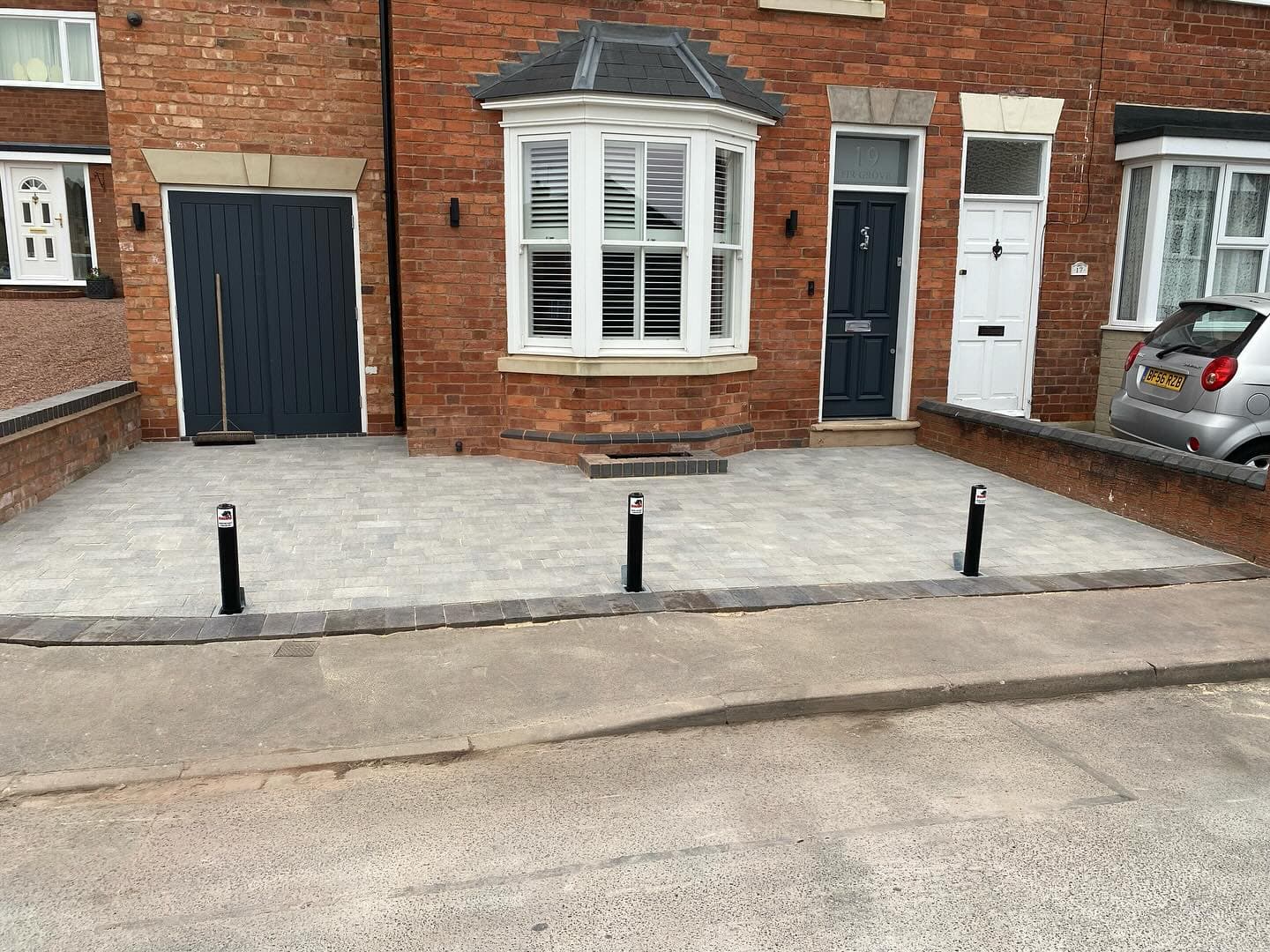
For a typical residential driveway in Stourbridge, Halesowen, Wolverhampton, Dudley or Kidderminster, expect £80 – £120 per square metre fully installed in 2026. A standard 40m² front driveway therefore lands at around £3,200 – £4,800. Larger driveways work out slightly cheaper per square metre due to scale; very small driveways (under 20m²) work out more expensive per square metre because of the fixed setup cost.
What should be included at that price
A properly priced quote should cover all of the following — if any of these are missing, ask why:
- Removal and disposal of the existing driveway surface
- Excavation to the right depth (typically 250 – 300mm for a vehicle driveway)
- Properly compacted MOT Type 1 sub-base
- Edge restraints set on concrete haunching
- Screeded sand bedding layer
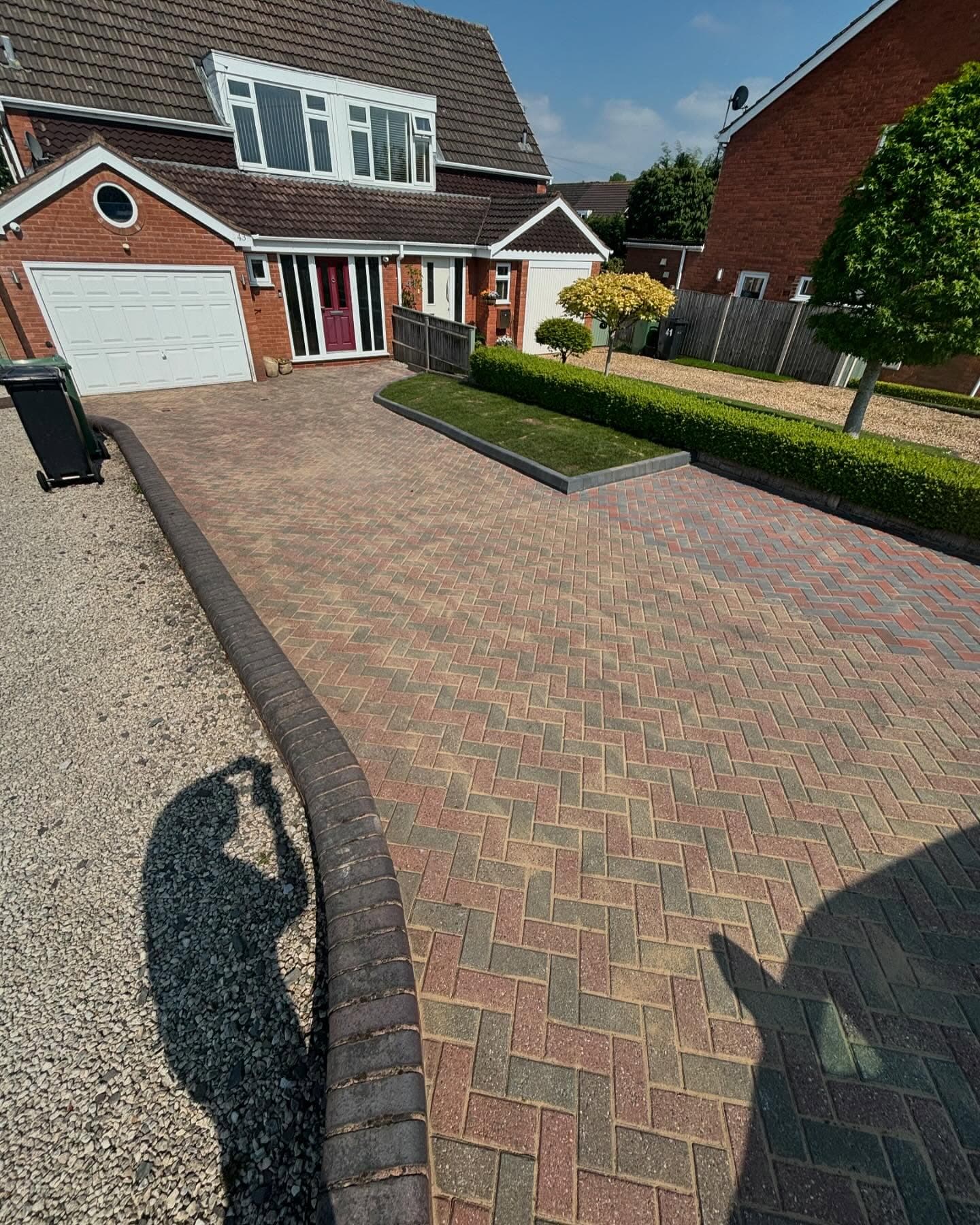
- Blocks laid in the chosen pattern (herringbone, stretcher bond or basket weave)
- Cuts around manhole covers, drains and edges
- Kiln-dried or polymeric sand jointing
- VAT and waste disposal
If a quote comes in at £55 – £65 per m², chances are something on that list is missing — usually the sub-base or the edge restraints. Both are invisible after the blocks go down, but a few years later the driveway sinks, the edges spread, and the whole thing needs lifting and relaying.
Why prices vary
Three things drive the bulk of cost differences between quotes:
- Existing surface. A bare-soil garden takes less excavation than a thick concrete or block-paved drive that needs full removal and disposal.
- Block choice. Standard concrete blocks (Brett, Marshalls Drivesett) cost considerably less than premium clay pavers or natural granite setts. Most West Midlands homes look great with mid-range concrete blocks.
- Pattern complexity. Stretcher bond is the cheapest pattern to lay (least cutting). Herringbone is the strongest pattern but takes longer. Basket weave is decorative — best for paths and patios rather than full driveways.
Pattern by use case
- Driveway with regular vehicle weight: 45° or 90° herringbone — the interlocking pattern is the strongest under load.
- Modern home, clean look: Stretcher bond — looks like brickwork, very contemporary.
- Path, patio or border: Basket weave — decorative, no cutting required at edges.
How long does it take to install?
An average 40m² block-paving driveway takes 4 to 5 working days to install: a day for removal of the old surface, a day for excavation and sub-base, two days for laying the blocks and edge courses, and half a day for jointing and clean-up. Weather doesn't usually delay block paving as long as it's not pouring with rain during the laying days.
How long does block paving last?
Properly laid, expect 25+ years with minimal maintenance. The big advantage over resin is that individual blocks can be lifted and replaced if anything ever gets damaged — invisible repair. Polymeric sand in the joints prevents weeds and ant tunnelling for the long term; the slight extra cost upfront saves on long-term maintenance.
Block paving vs other surfaces
We covered the full resin vs block paving comparison in detail. The short version: resin is lower maintenance and seamless; block paving has the edge on individual block repair and on traditional aesthetics. Both last 20+ years if installed properly.
Get a free quote
We install block-paving driveways across Stourbridge, Halesowen, Wolverhampton, Dudley, Kidderminster, Birmingham, Bromsgrove and the wider West Midlands. Request a free quote — usually back within 48 hours of the site visit.