By Nick Kennedy
Owner & Founder, Creative Contractors
If you're planning a new patio, you've almost certainly narrowed it down to two materials: porcelain or Indian sandstone. They're the two finishes we lay most often across Stourbridge and the West Midlands, and both are excellent. But they suit different homes, budgets and tastes — here's how to choose.
What is a porcelain patio?
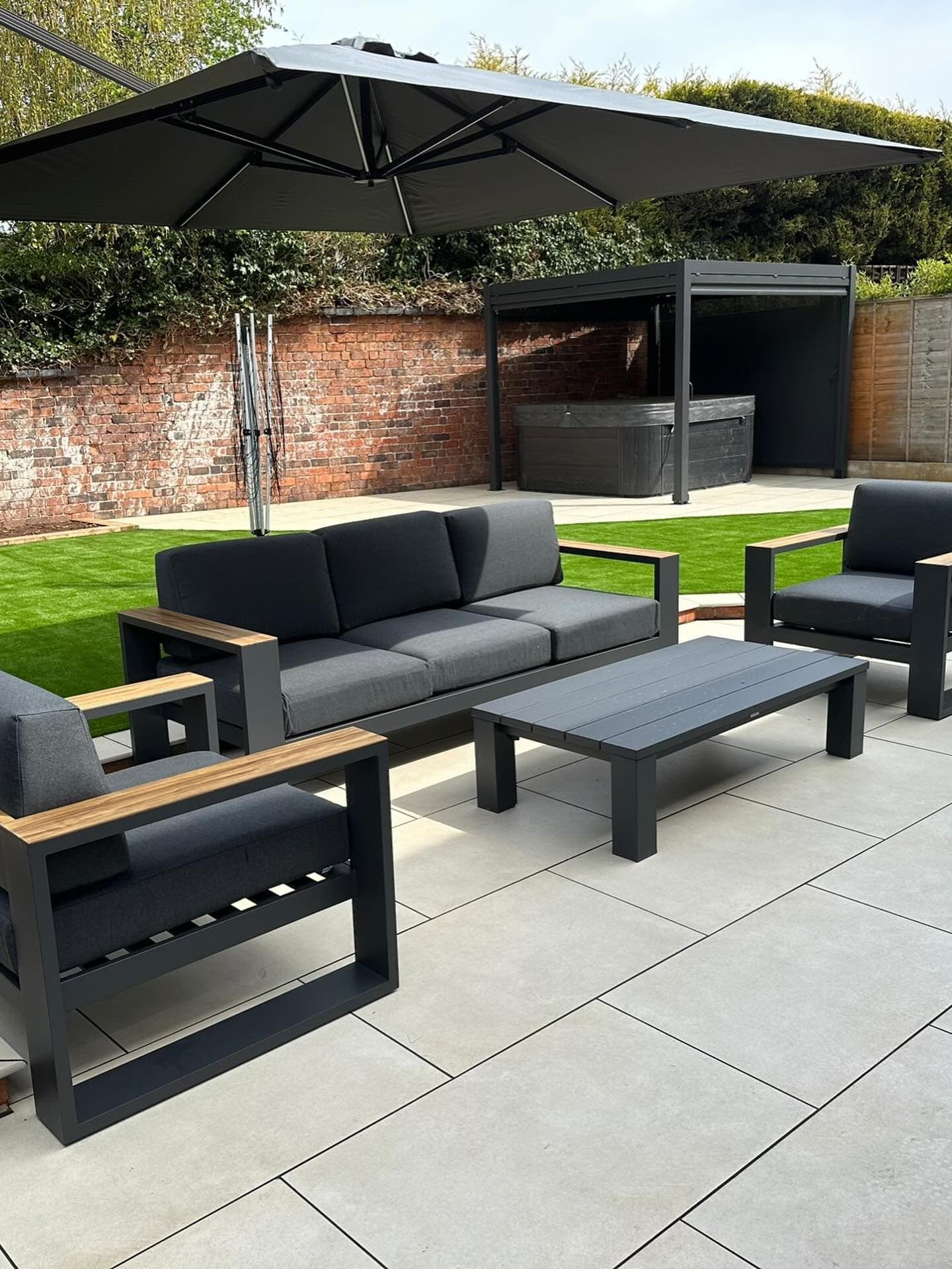
Porcelain paving is a manufactured tile — fired clay, dense and almost completely non-porous. It comes in large formats (600×900mm and 800×800mm are the popular sizes) and in a huge range of finishes, from convincing stone and timber effects to clean modern greys and beiges. Because it barely absorbs water, it's frost-proof, stain-resistant, and never needs sealing.
What is Indian sandstone?
Indian sandstone is natural stone, quarried and cut into slabs. Every piece is slightly different in colour and texture, which gives a patio real character and a softer, more traditional look. It's been the UK's go-to natural paving for two decades because it's beautiful and relatively affordable for a natural product.
Cost comparison (2026, West Midlands)
- Indian sandstone: roughly £90 – £130 per m² fully installed.
- Porcelain: roughly £120 – £160 per m² fully installed.
Porcelain costs more — partly the tile itself, partly because it needs a slurry primer on the back of each tile and more precise laying. For exact numbers on a full project, our garden landscaping cost guide breaks down how patio choice fits into a whole-garden budget.
Looks: modern vs traditional
This is usually the deciding factor:
- Porcelain suits modern and contemporary homes. Large-format tiles with tight joints make a small garden feel bigger, and the colour is uniform and crisp. It pairs beautifully with slatted fencing, composite decking and aluminium pergolas.
- Indian stone suits period and traditional properties. The natural colour variation and riven surface look right next to brick, render and older houses. It's warmer and softer underfoot in appearance.
Maintenance
Porcelain is the clear winner here. It never needs sealing, doesn't stain from BBQ grease or wine, resists algae, and a jet wash brings it back to new. Indian sandstone is porous, so it benefits from sealing every few years and is more prone to algae and staining in shaded, damp spots — common in north-facing West Midlands gardens.
Slip resistance and safety
Modern porcelain is manufactured with a textured, anti-slip surface (look for an R11 rating) and performs very well when wet. Riven Indian sandstone has natural grip from its uneven surface but can grow algae in shade, which gets slippery — manageable with cleaning, but worth knowing if you have steps or a north-facing garden.
Which should you choose?
We recommend porcelain if you want low maintenance, a modern look, a small garden to feel bigger, or a finish that will look identical in ten years. We recommend Indian sandstone if you have a period or traditional home, you love natural character and variation, or you want a beautiful patio at a slightly lower price and don't mind occasional sealing.
Either way, the install quality matters more than the material: a properly compacted sub-base, full mortar bed (never spot-bedded), pointed joints and falls to drainage are what stop a patio rocking, cracking or pooling. That's the part cheap quotes cut. You can see both materials in real gardens — like Helen's tiered porcelain patio in Halesowen — in our project gallery.
Get a free patio design visit
Bring us your garden and we'll talk you through both materials against your house, your budget and how you want to use the space. We install patios and decking across Stourbridge, Halesowen, Wombourne, Wolverhampton, Dudley, Kidderminster, Birmingham and Bromsgrove. Request a free quote.